HEADLINE NEWS
Korean Telcos Plan NFC Commercial Launches in 2010

UPDATE: South Korean mobile operators KT and SK Telecom plan to commercially launch NFC by the second half of this year, rolling out NFC phones and, at least for KT, high-capacity SIM cards to subscribers to carry retail payment, transit-fare collection, and banking and loyalty applications, NFC Times has learned.
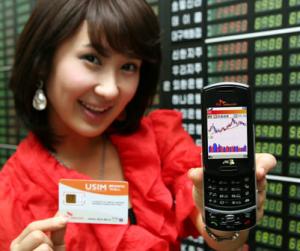
As reported earlier today by NFC Times, KT, which merged last year with mobile operator KTF, South Korea’s No. 2 operator, has disclosed its intention to try to buy a significant number of NFC phones from South Korea-based handset makers Samsung Electronics and LG Electronics, along with SIM cards packing between 128 megabytes and 1 gigabyte of flash memory.
UPDATE: NFC Times has now learned that SK Telecom, the largest operator in South Korea and an aggressive player in the mobile-payment field, is also preparing an NFC commercial launch by the second half of the year–also with the intention of buying standard NFC phones from Samsung and LG, a source said. The telco also likely will issue high-capacity SIM cards. SK Telecom has been heavily invested in nonstandard dual-interface SIM cards or combi-card SIMs now used for mobile payment, ticketing and other applications by the major mobile operators in South Korea.

SK Telecom may be ready to move to standard NFC phones along with its rival KT for its renewed push into mobile payments. SK Telecom bought a 49% stake the credit card unit of Hana Financial Group for more than US$340 million. At the time of the planned purchase, last December, the telco's CEO, Jung Man-won, said plans called for expanding its mobile credit card payment service and launching "next-generation" payment services this year. The telco will likely tie the payment services to its popular loyalty program, OK CashBag.
Kim Eun-seok, deputy director for the m-financial business team at KT Corp., told NFC Times he thinks the telco might order 300,000 phones for its planned launch this year, and likely more next year when the service would enter its “growth stage.” The 300,000 figure is a personal forecast, however, added Kim.
But if KT could convince the big-name Korean handset makers Samsung and LG to produce a significant number of NFC phones supporting the single-wire protocol connection to the SIM, it would peak the interest of mobile operators elsewhere that have been waiting for phones that support applications stored on the SIM. Kim said KT would also order NFC handsets from its phone subsidiary, KT Tech.
"If Korea is going to take NFC to greater lengths, then you get models from LG and Samsung, which will benefit the rest of the world," David Chen, vice president of product sales and delivery, advanced payment systems, for MasterCard Worldwide's Asia-Pacific region, told NFC Times. "The Korea market is going all crazy with mobile payment."
The NFC phones and high-capacity SIMs KT plans to introduce would replace nonstandard contactless SIM cards the telcos have been issuing for nearly three years. The SIMs hook into antennas in specially equipped mobile phones and carry the popular T-money transit application in the capital, Seoul, along with little-used mobile-credit card applications, a membership-loyalty program and mobile-banking services that enable subscribers to make contactless withdrawals from ATMs and to trade stock.
Kim said the telco will put these same applications onto the high-capacity SIM cards working in standard NFC phones. But with hundreds of megabytes of flash memory available on the SIMs, the telco believes it can sell subscribers entertainment-type content, which the subscribers could “pre-experience,” before buying.
“NFC-based USIM with a high capacity on the memory side–we can preload various entertainment: games, music content and video (on demand) clips,” said Kim, speaking at the recent Contactless Technology Congress in Shanghai, organized by NExTelecom. “This is a very profitable service for telcos.”
Kim told NFC Times the telco would earn revenue from the content by charging its regular fees for the data transmissions as well as an extra downloading fee.
The cards would also provide room for advertising videos. And subscribers could store expanded address books, as well, among other big content.
The SIM cards would support a high-speed USB connection with the handset to download the content to the cards. The connection was standardized more than three years ago by the European Telecommunications Standards Institute, but the high-capacity SIM project planned by KT–and a noncontactless high-capacity SIM planned by SK Telecom–might be the first real implementations of the ultra-mega-SIM concept. Other telcos have passed on the idea, but the Korean telcos apparently believe it could provide an alternative to SD and other flash memory cards operators sell, but which do not tie them closely to the subscriber.
The standard USB connection would still allow one contact point on the SIM for a standard single-wire protocol connection between the SIM and NFC chips.
And unlike the dual-interface SIM cards the Korean telcos use now, the NFC phones would enable KT to introduce applications allowing users to download content initiated by tapping smart posters. KT might also enable the phones to serve as point-of-sale terminals, said Kim.
“The mobile phone can be transformed for post mailmen and deliverymen,” he said. “They have a mobile POS handset, (and) anywhere, anytime, they (consumers) can pay by credit card or any other payment tools through the mobile POS handset.”
KT would also introduce peer-to-peer applications using the NFC phones, said Kim.
South Korean SIM developers KEBTechnology and Solacia, formerly Smart Card Laboratory, would provide the high-capacity SIMs.
KT, then known as KTF, took the lead in a series of “pay-buy mobile” NFC trials backed by the mobile operator trade group, the GSM Association. KTF launched its trial in late 2007, putting a MasterCard PayPass application onto a SIM card.