
U.S. Telcos Advance NFC Mobile-Payment Project
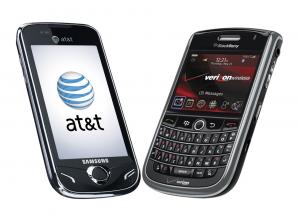
A consortium of major U.S. mobile operators continues to make preparations for launching mobile-payment services to subscribers, although one operator in the group, Sprint, is pulling back from the project, sources told NFC Times.
Details of the project remain confidential, but sources said the other three telcos, Verizon, AT&T and T-Mobile USA, are laying the groundwork for introducing mobile payment and other applications using full NFC phones and possibly other contactless technologies. The telcos have formalized their partnership in a joint venture and continue to try to recruit a CEO to lead the group, NFC Times has learned.
“All three carriers, AT&T, T-Mobile and Verizon, are making real moves to real NFC, focused on mobile payments but not limited to that,” a source told NFC Times.
Sprint is no longer taking an active role in the project and may have pulled out altogether, which observers chalk up to the telco’s need to focus on its core business to try to stem the hundreds of millions of dollars in losses it has been incurring every quarter. Sprint had been in charge of developing the technology for the project.
As NFC Times first reported in February, the major U.S. operators see an opportunity to get into the retail payments business and capture a substantial share of transaction revenue from merchants by equipping their subscribers with NFC phones and possibly such peripherals as contactless stickers, microSD cards or SIMs with flexible antennas.
They have been discussing the project for as long as two years, but according to one source, sealed the joint venture with a more formal contract only within the past two weeks. They are also making progress on choosing a trusted service manager to download and manage secure applications on the phones.
The telcos would also introduce other applications, such as loyalty programs, ticketing and access control, said sources. They said the NFC phones would store the secure applications either on SIM cards or in embedded chips in the handsets
A launch date–if the project goes forward–likely wouldn’t happen until late this year or early next year, though it might be announced before that. To hit that kind of launch schedule, the telcos will have had to have ordered NFC phones by now or to do so soon. Few NFC phones are currently available.
In addition to full NFC, at least one of the carriers, AT&T, has expressed interest in contactless peripherals for phones.
NFC Times has learned AT&T floated a request for information earlier this year on passive stickers, which subscribers could attach to the back of their phones and tap to pay as they would contactless cards. According to a source, who has seen the request, AT&T appeared to be considering putting a Zip contactless application on the stickers, which would mean it would be working with Discover Financial Services.
Business Model Up in the Air?
But it remains unclear whether the carriers are planning to try to launch their own payment scheme to take on the big U.S. banks and card networks Visa Inc. and MasterCard Worldwide; or would instead partner with card networks and banks to offer cobranded products. Some sources speculate the telcos are split among themselves about whether to launch their own scheme.
A cobranded model, in which the mobile operators would roll out both payment cards and mobile applications with partner banks, would still allow the telcos to collect some transaction-fee revenue from merchants. But it would not entail building a new payment network.
“There’s lots of risk (with a new scheme), and carriers don’t know anything about payment networks,” said one industry source with knowledge of the project.
Others speculate the telcos wouldn’t order millions of NFC phones or lay the foundation for introducing mobile payment if they weren’t planning something big, to wit: a payment scheme of their own to compete with Visa and MasterCard. They could then collect nearly all of the transaction revenue for themselves.
With almost 200 million subscribers between them, any move by Verizon and AT&T into retail payments is cause for concern among banks.
Sources from the banking industry note that mobile operators in both the U.S. and abroad have long been covetous of the payments revenue of banks. But they have never been able to capture a significant market share in the places they’ve tried. Among other things, launching a new payment system requires a large base of merchants accepting the new payment brand and expertise in managing risk, neither of which mobile operators have, say the sources.
Some U.S banks are embarking on their own mobile-payment initiatives.
Banks Look to Contactless Peripherals
For example, as NFC Times reported last month, Citigroup is launching a passive sticker, which customers could attach to their phones or other devices. The bank has yet to announce the product, which was expected by the end of April, raising speculation of production delays.
UPDATE: “The stickers are currently available to customers who request them,” Kurt Weiss, a senior vice president in the Citi Cards unit and head of global mobile strategy, said in a statement to NFC Times.
UPDATE: Citi declined to comment directly on possible delays, but a source close to the bank said there were no problems with production of the sticker, which supports a MasterCard PayPass application. Citi has posted a new Web page for its soft launch of the product.
 The sticker is being launched through Citi’s U.S. cards division, and the bank, especially its growth ventures unit, has expressed strong interest in moving beyond trials. Citi has held at least four NFC trials worldwide.
Stickers and contactless microSDs have attracted the attention of banks because the peripherals could enable them to introduce contactless-mobile payment to customers while largely bypassing the telcos.
Visa has been promoting a contactless microSD card from U.S.-based DeviceFidelity, which it will field test with banks later this year following employee trials. The tiny flash memory cards will carry a Visa payWave contactless application, which subscribers could insert into microSD slots on handsets–turning the phones into payment devices. A special attachment would also enable users of Apple’s iPhone to tap their phones to pay at payWave point-of-sale terminals. The iPhone doesn’t have its own microSD slot.
“The banks are trying to figure out a way to circumvent the carriers, and now the carriers are trying to find a way to circumvent the banks,” said an observer.
Perhaps the biggest challenge for mobile operators attempting to launch their own payment scheme would be signing up enough merchants to accept the new form of payment.
Targeting Wal-Mart?
The speculation is that the telcos would try to slash interchange fees to attract big, high-profile, merchants unhappy with the fees banks charge and which are set by the major card schemes. That would include the biggest of merchant of them all, Wal-Mart Stores Inc., the world’s largest retailer, with revenue of more than $405 billion in the last fiscal year.
One payments industry consultant suggested the mobile operators could cut interchange fees by more than half compared with the rate Visa has set for signature debit transactions. The lower fees would also be substantially below Visa’s less costly PIN-based debit interchange rate. If the telcos were to introduce a credit payment application as well, they would have even more room to undercut the major card schemes. They might also launch a prepaid application.
Wal-Mart, which has said it does not accept contactless cards because it sees no economic benefit in doing so, just might be enticed to join the carrier’s NFC-enabled payment scheme if fees were substantially lower, said observers. “You probably have critical mass just with Wal-Mart,” said the consultant. Wal-Mart has more than 4,300 supercenters, discount department stores, warehouse stores and neighborhood markets in the U.S.
He believes other big chains could also be encouraged to join, such as consumer electronics giant Best Buy and home improvement retailer Home Depot, both of which already accept contactless and which also complain about interchange.
Jamie Henry, Wal-Mart’s director of payment services, briefly mentioned during his presentation at the Smart Card Alliance conference last week in Scottsdale, Arizona, that mobile payment could lower costs for Wal-Mart. When asked to explain afterward, he suggested to NFC Times that there could be alternative payment schemes that are lower in cost than the existing card brands.
But talk of Wal-Mart supporting a new payment scheme is only speculation for now, John Drechny, Wal-Mart’s senior director of payment services, told NFC Times.
“We’re always looking for a way to lower our cost, so we will talk to anyone that has an idea to achieve that,” he said.
It’s true that any partnership between the mobile operators and Wal-Mart or other parties remains speculation. But what is clear is that the largest mobile operators continue to lay the groundwork for a possible move into the U.S. payments market.
As one banking industry source put it: In contrast to the noise the telcos made in the past about entering the payments market, this time, “no doubt, it seems more serious.”
 Facebook
 Twitter
 LinkedIn
HEADLINE NEWS


Syndicate

