HEADLINE NEWS
Barclaycard and Orange UK Prepare to Launch NFC

While many doubt that telcos and banks will ever agree on a business model for NFC and complain about the continued lack of phones supporting the technology, two major players in the United Kingdom–Barclaycard and Orange UK–are preparing for a commercial launch.
One of the largest card issuers in the UK, Barclaycard, and the soon-to-be-biggest mobile operator, Orange UK, are expected to begin rolling out NFC by the end of the year. If they hit that mark, it would be one of the first major commercial launches of NFC services worldwide. It could also spur others into action sooner, such as the mobile-payment partnership of UK telco O2 and NatWest bank.
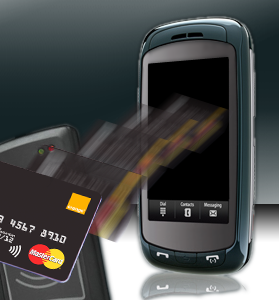
A year ago, Orange and Barclaycard announced plans to eventually launch NFC mobile payment and other services. And they later let it be known their target was 2010 for a rollout. In January, they introduced a contactless cobranded card that customers could tap to pay at retail outlets and receive SMS transaction alerts.

But a year after the partnership announcement, the lineup of NFC phones on the market remains weak, which is an apt description of the UK economy, as well. And no big retail chains in the UK have yet announced they would accept contactless payment from either cards or phones.
However, none of that seems to be standing in the way of an NFC launch this year by the Barclaycard-Orange partnership, with executives of both companies sounding optimistic tones.
According to Dan Salmons, director of global innovations for Barclaycard, what mainly remains to be done is making sure the customer experience is right for the launch. In recent weeks, Barclaycard and Orange have conducted customer simulations and focus groups to tune the offering.
“We’ve innovated end to end in the purchase experience,” Salmons said at the recent Mobile World Congress in Barcelona. “We’ve got very clear ideas about how we’re going to drive up acceptance and usage.”
But availability of both phones and point of sale terminals accepting contactless remains a key hurdle, said observers.
The partners might have launched this spring were it not for the lack of phones and relative scarcity of payment acceptance points, said Waqar Qureshi, former head of EMV card migration for Visa International, who served as a consultant for Orange UK until eight or nine months ago.
There are rumors again circulating that one or more tier-one retail chains will announce during the first half of this year that they will begin rolling out contactless terminals at all or most of their outlets in London and the UK, said observers, though there have been similar rumors in the past. At present, about 20,000 terminals or locations accept contactless cards, though most of them are small fast-food chains or independent merchants with bank-supplied terminals that mainly Barclaycard has signed up through its acquiring arm.
“We absolutely want more retailers onboard,” Salmons told NFC Times. “We’re not waiting for retailers. We’re not waiting for the rest of the market. We’re not waiting for anything. We’re working on our commercial launch right now.”
Phones Not a ‘Dependency'
While it’s unclear when more NFC phones will hit the market, Salmons told NFC Times that “we don’t see handset availability as a particular dependency.”
That could mean handset makers are ready to fill orders for at least two or three stylish phones supporting payment, ticketing and other secure applications on the SIM card with a single-wire protocol connection to the NFC chip. To date, the only such phone that has surfaced is Samsung Electronics’ S5230. The touch-screen phone, while not a 3G model, is popular in the UK and elsewhere in Europe. It will be used for trials this spring in Spain and France and possibly other countries.
A Samsung representative said at the Mobile World Congress the phone maker planned another NFC handset this year, a 3G model. And other phone makers, LG Electronics and HTC, could introduce models this year supporting the single-wire protocol, or SWP.
In addition, French handset maker Sagem has an NFC phone for a niche market planned that also supports SIM applications. And while Apple is rumored to be planning to incorporate NFC in its next iPhone, due out in mid-2010, it probably will not support the SWP connection to the SIM. Orange is insisting all secure NFC applications be stored on the cards it issues to subscribers.
“The view of the operators is, if they place an order they will get the phones, and there will be a selection of handsets to choose from,” said Andrew Henderson, head of the UK Contactless Mobile Forum, a loose association of mobile operators in the UK.
Initial Business Model Worked Out
Barclaycard and Orange have already overcome perhaps the biggest barrier to NFC mobile-payment rollouts: They’ve agreed on how to split the revenue–at least for the short-term.
“The business model got ironed out about a year ago; both Orange and Barclaycard agreed on common revenue sharing, whereas in France all that is up in the air,” said Qureshi, who has also consulted for service providers in France.
France’s major telcos and some of its major banks are keen to launch NFC, but are still talking about how to share revenue. They will together hold a big NFC demonstration project this spring in the Mediterranean city of Nice with other service providers. The French players hope to commercially launch NFC services next year.
Salmons wouldn’t say what the business model is between Barclaycard and Orange, but it is unlikely to follow the French model, in which mobile operators will seek to charge banks and other service providers a fee to put their applications on the telcos’ SIM cards. And it’s safe to assume Orange UK won’t get a cut of merchant transaction fees from Barclaycard’s retail payment application.
“A key part of this, it’s often discussed, how will the commercial model work?” asked Barclaycard’s Salmons during a presentation at last month’s Mobile World Congress. “Well, the answer, of course, is none of us can know for sure, so we’ve been very intelligent in the way we’ve articulated the commercial (issues) jointly with Orange to make sure we’re in this together, and we’re aware of being able to adjust things as we go along because none of us will be able to predict what the world will look like in five year’s time.”
Neil Garner, head of UK-based NFC application company Proxama, believes Barclaycard and Orange will make the partnership pay by advertising and selling services to the joint customer base.
“They have to be more pragmatic: Share marketing, share customer information, cross-selling and services, advertising and sharing customer data, rather than just renting a piece of real estate on the SIM,” he said.
Application Watch
Moreover, Barclaycard and Orange are not talking yet about which applications will go onto the SIM cards, except for a Barclaycard credit application supporting PayPass technology from MasterCard Worldwide.
Most observers also expect the partnership to offer Transport for London’s Oyster transit-ticketing application, which was a hit during an NFC trial launched by O2 and Barclaycard in late 2007. But the contactless application now running on most Oyster cards, Mifare Classic, has weak security, making it vulnerable to hackers. Any hacks of Oyster with the new NFC service could prove embarrassing to the project organizers, noted Proxama’s Garner.
Transport for London is upgrading to a more secure version of Mifare, called DESFire. But there are no SIM cards yet on the market that can support it. At least one card vendor, Gemalto, has announced it will have a DESFire SIM available later this year.
Besides retail payment and transit ticketing, reports say among the services Barclaycard and Orange will also likely introduce are P2P mobile-money transfers using text messaging, as well as couponing, transaction alerts, mobile banking and retail store and ATM locators.
Big Enough to Cover the Market
In France, the telcos are shunning bilateral agreements for NFC launches like the one Barclaycard and Orange have concluded because they believe fragmentation in the market would create problems for customers. For example, if only one operator and one bank launch together, subscribers of the operator who are not customers of the bank could not use the service. That could create ill will for NFC.
But Barclaycard and Orange UK are counting on the fact they are two of the largest players in their respective markets in the UK. Barclaycard estimates it owns 20% of the British payment-card market in the UK. Orange UK, currently the third largest mobile operator, plans to merge with No. 4 T-Mobile this spring. The deal, which has gotten clearance from regulators, will create the country’s largest mobile telco–with nearly 30 million subscribers and a market share of more than 35%.
Furthermore, both partners appear committed to mobile payment and other NFC services.
Barclaycard, which considers itself as the UK’s payments-innovation leader, has so far carried the country’s contactless card rollout on its shoulders. Together with its parent, Barclays, the bank has issued six million credit and debit cards, more than any other UK financial institution by far. And Barclaycard’s acquiring arm is responsible for most of the terminals in the market.
Qureshi, estimates Barclays and Barclaycard have spent £50 million (US$76 million) on cards and terminals alone. That doesn’t count the millions the bank has spent on advertising, including peak- or prime-time television commercials, promoting contactless payment.
The contactless card rollout is the first part of Barclaycard’s strategy for capturing more cash transactions that will lead into the planned mobile-payment service. “If you don’t have the contactless cards out there, you can’t win over the retailers,” said Salmons. “If you don’t win over the retailers, you haven’t anywhere to use your mobile phone with NFC.” Barclaycard has also held two NFC trials, including one launched in January 2009 testing high-value mobile payment.
Orange UK’s parent, France Telecom-Orange, has a large mobile-payment unit based in France. In the UK, Orange has held at least two NFC trials in the UK. And Orange UK CEO Tom Alexander stressed the importance of NFC to the telco’s plans when he said in a statement announcing the Barclaycard-Orange partnership last year that mobile payment is the type of service “that will change the way we live and work.”
The project has equally strong backing from then-Barclaycard CEO Anthony Jenkins, who in 2008 famously predicted the end of plastic cards in a decade, in favor of mobile payment and other form factors. He’s since been promoted at the bank.
Barclaycard’s Salmons believes following the French way to NFC, that is, telcos and banks moving in unison to rollouts, would only slow things down in terms of a commercial launch in the UK. There would be too many opinions and preferred options to take into account, he said.
“There is more than one way to do this, (but) if you’re both learning to dance, it’s kind of easier to learn to dance with one partner,” he told NFC Times.
The dance rehearsals to fine tune the payment experience for customers are apparently going on now. Exactly when Barclaycard and Orange pull back the curtain on their NFC launch remains to be seen, but others in the industry will be eager to watch the performance. NT